


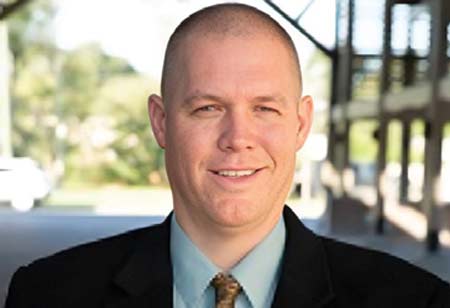
Eric C. Williams serves as City Manager for the City of Inverness in Central Florida. With more than two decades in public administration, he has worked across planning, GIS, emergency response, and long-range government operations. His leadership emphasizes disciplined planning, collaboration, and preserving the community’s small-town character. Here is our conversation with him.
Professional Journey Across Government Functions My path into city administration did not begin with a plan to work in government. Early in my career, the private sector offered the greatest opportunity for professional and financial success. I worked in private industry while completing my education and later operated a consulting business. An opportunity eventually brought me to Florida, initially to gain exposure to how government operated. That experience developed into a career in public administration that has now spanned more than two decades. During that time, I worked across several areas of government operations, including land management, emergency response, GIS, land use planning, and long-range planning. Each role provided exposure to how communities function and how planning decisions shape growth and development. Before joining the City of Inverness, I served as Planning Director and GIS Director for Citrus County during a period when technology was becoming an increasingly important tool in growth management and decision-making. I joined the City of Inverness as Assistant City Manager in 2013, with the expectation of eventually transitioning into the City Manager role. That transition took longer than originally anticipated, but the additional time allowed me to learn from experienced leadership within the organization. Inverness has had only four city managers in more than one hundred years, reflecting a tradition of stable leadership within the city. Leadership in a Small County Seat Community City managers often describe their role in terms of the departments they oversee, like utilities, public safety, and growth management. Those responsibilities exist here as well, but I view the role primarily through the lens of leadership and organizational culture. The success of a municipal government depends on the strength of its staff and the ability to create an environment where people can perform at a high level. Partnerships beyond city government are equally important. Inverness works closely with businesses, nonprofit organizations, volunteers, and civic partners throughout the community. As the county seat, coordination with other levels of government is also essential. The city government center houses offices for county leadership, similar to those of state and federal representatives, creating an uncommon level of intergovernmental collaboration for a city with fewer than 8,000 residents. A central part of the role is to embody a philosophy that encourages people and institutions to partner and work together toward shared goals. Even though the residential population is small, Inverness serves a much larger daily population. Because the city functions as the county seat, the number of people interacting with the city each day can reach thirty-five to forty thousand. Managing that level of activity requires coordination across institutions and strong working relationships throughout the region. Inverness has long operated around the idea of being a ‘small town done right,’ balancing growth pressures with the responsibility to preserve what makes the city distinct. Technology Supporting Efficiency and Service Delivery Technology plays an important role in supporting city operations that rely on fewer than 100 full-time employees while serving a much larger daily population. Digital systems allow the city to maintain operational efficiency while continuing to deliver consistent services. The community historically has had a large retiree population, which means technology adoption must be balanced with residents who still prefer direct interaction with city staff. Many people prefer to speak with someone in person or by phone rather than rely exclusively on automated systems. As a result, the city focuses on using technology to strengthen internal operations while preserving accessible customer service. Automated meter infrastructure within the utility system provides a clear example. Communicative meters allow staff to monitor usage remotely, eliminating the need to send personnel into the field to manually read meters. The system improves efficiency and reduces operational costs. Digital tools also support billing systems, cross-departmental operational coordination, and the management of large community events. Inverness hosts more than one hundred events each year, and several attract crowds larger than the city’s population. Public and private partnerships often bring additional technological capabilities that support event management, security, and operational coordination. Revitalization, Infrastructure, and Environmental Stewardship City initiatives in recent years have focused on infrastructure improvements, downtown revitalization, and environmental protection. Progress has come through a combination of investments that strengthen the community’s long-term stability."You can get lost in complexity, but returning to simple principles such as plan, fund, and execute usually helps bring the right path forward into focus."
